Powered Land
Drax and Brookfield Plan a Gigawatt Data Center
Drax and Brookfield aim to build a data center of more than a gigawatt at Drax’s power station; Brookfield says potential investment, chips included, could exceed £20 billion.
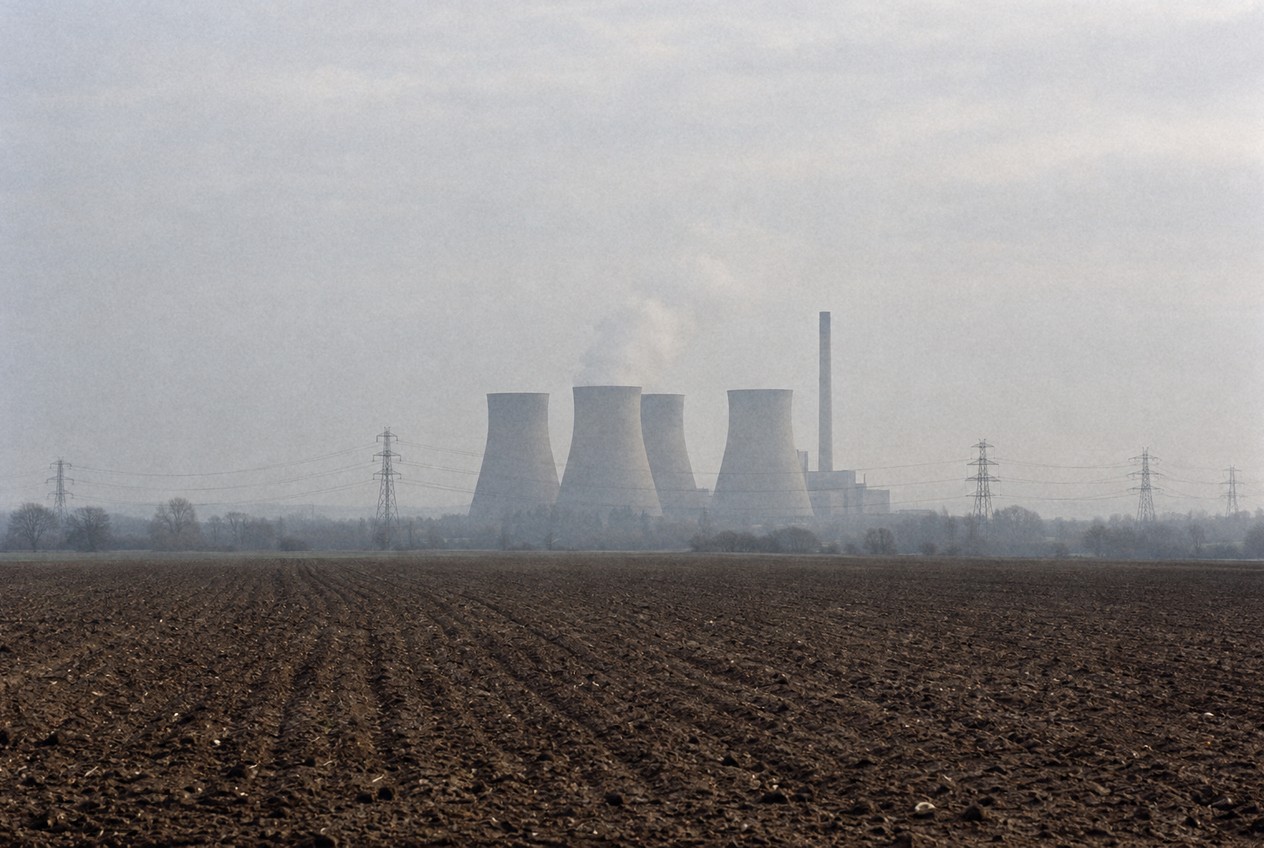
SELBY, England, Nov. 3 — Drax, which runs a biomass power station in North Yorkshire, has signed an agreement to develop a partnership with Brookfield and Radiant, Brookfield’s AI infrastructure company, aimed at building a data center of more than a gigawatt on the station’s estate, it said on Tuesday. Investment capital is to come through a joint venture that Brookfield and Qai, a technology company headquartered in Qatar, announced in 2025.The PartnersRadiant, headquartered in Britain and backed by Brookfield, builds and operates “AI factories” for “hyperscalers, enterprises, telecommunications providers, and sovereign institutions,” the announcement says. Qai, it says, “operates under the Doha Investment platform.”
Brookfield estimates that total potential investment, including chips, could exceed £20 billion, with an initial £2.5 billion as part of a first phase of up to 100 megawatts, targeted to run on grid power from early 2028.
What Drax brings is the connection. The estate covers more than 1,000 acres beside one of the country’s largest substations, with about 4 gigawatts of grid access and 2.6 gigawatts of dispatchable generation, by its account. Others wait in line: in July, Ofgem, the energy regulator, counted about 315 data-center projects, with about 73 gigawatts, in Great Britain’s connection queue, against peak demand of 45 gigawatts, by Ofgem’s count. For Drax, the data center would be a second business for a plant whose government contract for biomass power ends in March 2031.
Little of it is settled. Radiant will seek commitments from anchor customers before construction begins; the announcement names no tenant. The first phase also needs planning, regulatory and network approvals, commercial agreements and a final investment decision from each party. A planning application is being prepared, and a public consultation is expected to begin this month.
The second phase is what Drax calls an “ambition”: options for 500 megawatts between 2028 and 2031, supplied “behind the meter” from the station’s own generators under a long-term power purchase agreement, with more to follow after 2031. During the April 2027–March 2031 contract period, the 500 megawatts would need the state’s consent: Drax’s Contract for Difference, signed in November 2025 for about 6 terawatt-hours a year of biomass generation from April 2027 to March 2031, lets it ask to use up to 500 megawatts to power a data center, subject to agreement with the government and the Low Carbon Contracts Company.The ContractA Contract for Difference guarantees a generator a strike price for each megawatt-hour: it is paid the difference when the market price is lower, and pays money back when the market price is higher. The Low Carbon Contracts Company, which delivers the scheme, is wholly owned by the secretary of state for energy security and net zero. The decision weighs value for money for consumers, energy security and sustainability, among other factors, Drax said.
“Drax Power Station is one of the few UK sites that can provide large-scale reliable power directly to data centre customers by utilising existing and underutilised generation capacity,” Will Gardiner, Drax’s chief executive, said in the announcement. Sikander Rashid, Brookfield’s head of AI infrastructure, called the project “a critical piece of sovereign AI.”
Not everyone counts the station’s power as clean. In an analysis published on Oct. 9, the Natural Resources Defense Council, an American environmental group, estimated that a 1.1-gigawatt data center running around the clock on the station’s output would burn nearly 5 million metric tons of wood a year and release more than 8.6 million metric tons of carbon dioxide, applying rates from Drax’s 2025 annual report. British accounting rules treat the carbon from burning wood as zero, on the theory that new trees absorb it; regrowth can take decades or centuries to make up the difference, the group says.
The group took its 1.1 gigawatts from Drax’s 2025 full-year results; Tuesday’s plan sets 500 megawatts for the behind-the-meter phase and leaves the size of the third open. Drax says the station’s role “providing low-carbon dispatchable power” will remain unchanged. When the group published an earlier estimate in September 2025, a Drax spokesperson told The Yorkshire Post that the biomass is “primarily sourced from North America and comprises material that has few other economic uses.”
Drax’s shares were up about 9 percent in London in morning trading, at 883.5 pence at 10:35 a.m. against Monday’s close of 809 pence, according to CNBC’s quote data. Drax did not say whether it has yet asked for the 500 megawatts, or when the government might decide.
Sources
- Drax Group plc (RNS, via Investegate), “Strategic partnership for GW-scale data centre,” Nov. 3, 2026.
- Low Carbon Contracts Company, “Contracts for Difference: About,” Nov. 3, 2026.
- Low Carbon Contracts Company, “Contracts for Difference,” Nov. 3, 2026.
- Ofgem, “Consultation: Curate – Demand Connections Reform,” July 29, 2026.
- Natural Resources Defense Council, “Drax’s Planned Data Center Would Burn Nearly 5 Million Metric Tons of Wood a Year,” Oct. 9, 2026.
- The Yorkshire Post, “Fears Drax-powered AI centre may ‘burn a tree every time it is used’,” Sept. 24, 2025.
- CNBC, “Drax Group PLC (DRX-GB), quote,” Nov. 3, 2026.
- Companies House, “Drax Group plc, company 05562053: registered office,” Nov. 3, 2026.