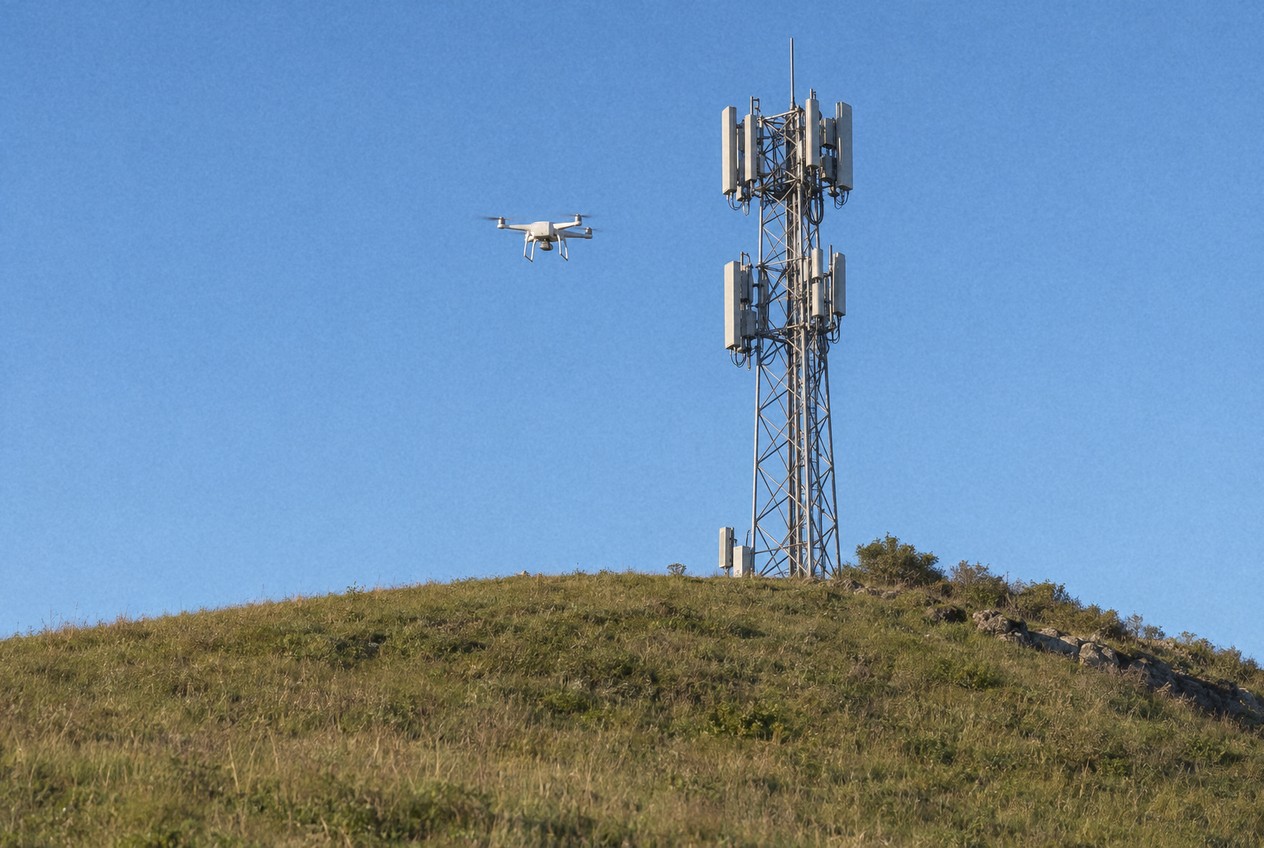
Spectrum
F.C.C. Opens Cell Spectrum to Drones, Tightens Lab Rules
The F.C.C. voted to open 50 megahertz of cellular spectrum to drones and to recognize only test labs in the U.S. or reciprocal countries from Dec. 1, 2028.
WASHINGTON, Oct. 29 — The Federal Communications Commission voted 3–0 on Thursday to let drones use the 800 MHz cellular band, lifting a 1991 prohibition on “airborne” use that had kept them off 50 megahertz of licensed, nationwide, low-band spectrum.
In a second 3–0 vote the same day, it adopted rules under which, from Dec. 1, 2028, it will recognize only device-test labs in the United States or in countries that grant American labs reciprocal recognition. Devices submitted for F.C.C. certification must be tested by recognized labs; the commission’s draft order put the American share of that testing at 3.6 percent in 2025.
The first vote gives wireless carriers more capacity to sell to drone customers: mostly AT&T and Verizon, in the reading of DroneXL, a trade publication. The second will raise what device makers pay for testing, by the commission’s draft estimate. Neither changes where a drone may fly. Routine flight beyond the pilot’s line of sight still waits on the Federal Aviation Administration’s Part 108 rule, which had not appeared in the Federal Register by early Friday.
The drone order opens the band to “command, control, communication, and payload operations,” the commission said. Its 1991 rule was written “in an effort to minimize the risk of interference to terrestrial networks from phones on planes”; the commission now finds that rule “no longer necessary as applied to unmanned aircraft systems” because modern networks can keep drones from interfering.The 800 MHz BandCellular service runs at 824–849 MHz and 869–894 MHz, the draft order says. The commission adopted rules to license cellular service there in 1981. Drones already operate in the 700 MHz and PCS bands, which carry no such restriction, the Oct. 8 draft noted. The draft also retained the ban on airline passengers using phones in flight and rejected the limits on drones’ power and altitude that Zipline and another commenter had suggested.
Two days before the vote the commission published statements of support from 11 companies and groups, among them AT&T, Verizon, Amazon, Red Cat and Ondas. “As demand for drone delivery grows, reliable wireless communications are essential to expanding operations and service to more customers,” Ashleigh de la Torre, Amazon’s vice president of public policy, said in the commission’s release. Haye Kesteloo, DroneXL’s editor-in-chief, put it in proportion: “I don’t think spectrum was ever what kept American operators from flying BVLOS at scale,” he wrote.
The commission said its 2025 “Bad Labs” rules, which barred ownership or control of test labs by entities deemed national-security threats, had cost 29 labs their recognition. It has also withdrawn recognition from two labs in non-reciprocal countries, and begun the process for two more, where the labs “had copied-and-pasted test results.”Reciprocal EconomiesCountries or territories with a Mutual Recognition Agreement, or a comparable reciprocal agreement, with the United States, in the draft order’s definition. China is not one: the draft calls it “a non-Reciprocal Economy.”
The draft put China’s share of the testing for F.C.C. equipment approvals at more than 82 percent by 2025, up from roughly 13 percent in 2007. Equipment approved by a supplier’s declaration of conformity instead needs no recognized lab; the draft leaves that untouched, though it keeps open an earlier proposal to require one. It put the cost of moving the work at about $79.3 million a year in estimated economic costs from two years after adoption, plus $23.6 million in one-time familiarization costs, without estimating how much buyers would bear. China’s government argued in comments that the restrictions were discriminatory and violated the World Trade Organization’s agreement on technical barriers to trade; three American trade associations, the Consumer Technology Association, Auto Innovators and ITI, also opposed them, the draft says.
Neither adopted text had been posted by 5:50 a.m. Friday, so any changes from the drafts are not public. Nor were the separate statements of Brendan Carr, the chairman, and Olivia Trusty, a commissioner; Anna Gomez, the commission’s third member, approved both orders without one. The draft drone order would take effect 30 days after publication in the Federal Register, and the labs order also opens a further rulemaking on testing capacity and other safeguards.
The commission is scheduled to take up drones again on Nov. 19. A draft published Thursday would open the 450 MHz band to drone command and control, offer to convert its site-based licenses, all held by AURA Network Systems, into a single nationwide license, and allow ground-based radar at 24.45–24.65 GHz to help detect drones. DroneXL reads the F.A.A. Reauthorization Act of 2024 as requiring Part 108 by Dec. 7.
Sources
- Federal Communications Commission, “FCC Opens More Cellular Spectrum for Drones (news release, Report and Order FCC 26-72),” Oct. 29, 2026.
- Federal Communications Commission, “FCC Proceeds on Device Test Lab Onshoring, Reciprocity Rules (news release, Third Report and Order and Third Further Notice FCC 26-73),” Oct. 29, 2026.
- Federal Communications Commission, “Fact Sheet and Public Draft Report and Order, Unlocking the 800 MHz Cellular Band for Drone Use (FCC-CIRC2610-03),” Oct. 8, 2026.
- Federal Communications Commission, “Fact Sheet and Public Draft Third Report and Order and Third Further Notice, Prohibiting Test Labs and Certification Bodies in Non-Reciprocal Countries (FCC-CIRC2610-05),” Oct. 8, 2026.
- Federal Communications Commission, “What They Are Saying: Stakeholders Support 800 MHz Cellular Spectrum for Drone Operations,” Oct. 27, 2026.
- Federal Communications Commission, “October 2026 Open Commission Meeting,” Oct. 29, 2026.
- Federal Communications Commission, “Fact Sheet and Public Draft Report and Order, Facilitating Opportunities for Advanced Air Mobility (FCC-CIRC2611-02),” Oct. 29, 2026.
- Federal Communications Commission, “FCC Announces Tentative Agenda for November Open Meeting,” Oct. 29, 2026.
- Federal Communications Commission, “Leadership.”
- DroneXL, “FCC Opens 800 MHz to Drones, but BVLOS Still Waits on FAA Part 108,” Oct. 29, 2026.
- Federal Register, “Normalizing Unmanned Aircraft Systems Beyond Visual Line of Sight Operations (proposed rule, RIN 2120-AL82),” Aug. 7, 2025.