Capacity
Microsoft Spends Below Plan as Rented Capacity Runs Late
Microsoft says delayed third-party capacity held its capital spending to $45.2 billion, below the “over $50 billion” it forecast; OpenAI brought it $10 billion of revenue.
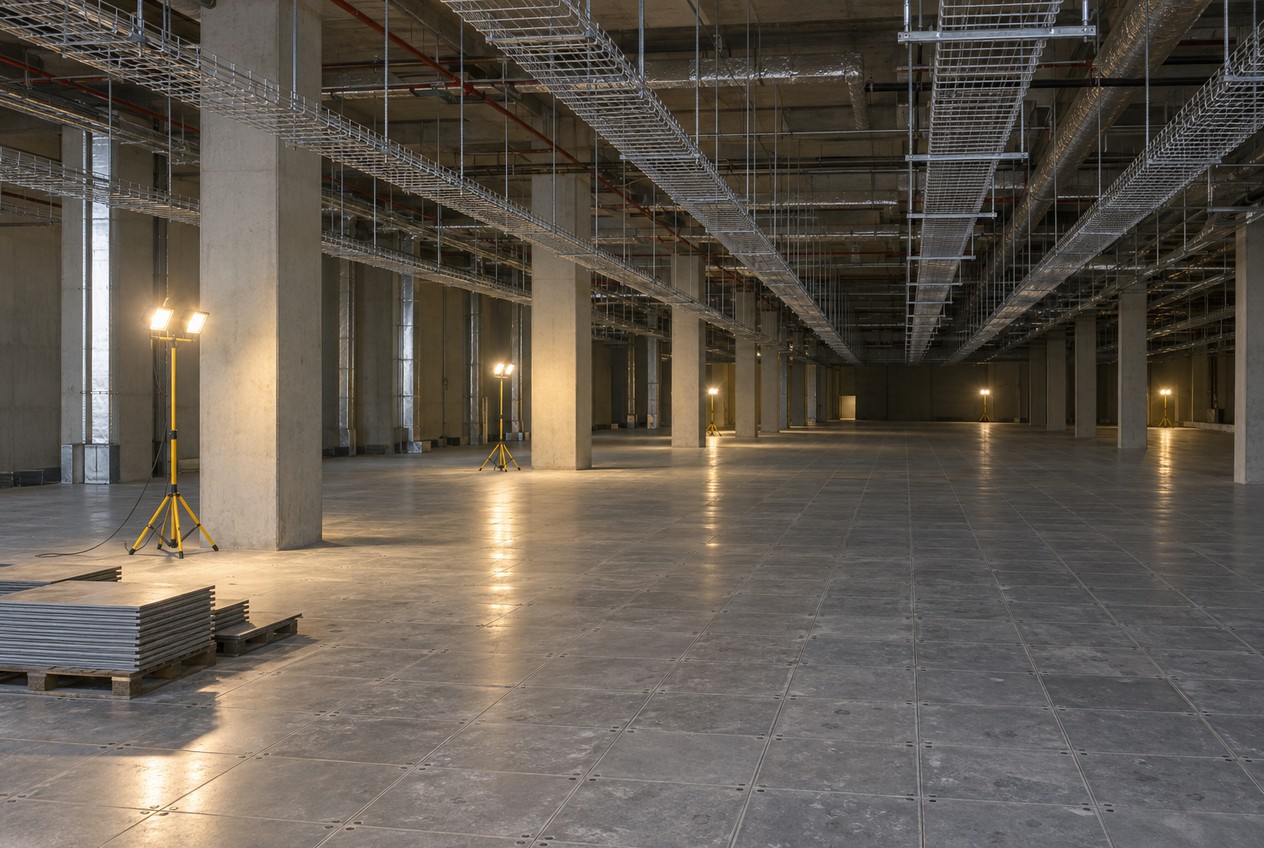
REDMOND, Wash., Oct. 28 — Microsoft’s spending on its build-out fell short of its own forecast last quarter because, it said, some of the computing capacity it rents from other companies arrived late. Its capital expenditures, including finance leases, were $45.2 billion in the three months to Sept. 30, Amy Hood, its chief financial officer, said on Wednesday, against the “over $50 billion” she had forecast in July. Azure, its cloud-computing business, still grew 48 percent from a year earlier.
“Capital expenditures were $45.2 billion, as some third-party capacity deliveries we expected in Q1 were delayed,” Ms. Hood said on the company’s earnings call. Microsoft cut its forecast of capital spending for calendar 2026 to about $170 billion, from about $175 billion in July, and expects spending to “accelerate” in the second half of its fiscal year, which ends in June. The cut, she said, was “due to the 3P capacity delays,” and the acceleration would come “primarily from CPUs, inclusive of higher memory and storage costs, and GPUs, as well as the 3P capacity deliveries that shifted to H2.” For the quarter to December she forecast “over $50 billion.”
Cash paid for property and equipment was $39.4 billion. Finance leases, $7.4 billion of the quarter’s total, are counted in full when a lease begins, Ms. Hood reminded analysts.Off the TallyIn July Microsoft said it was lengthening the estimated useful lives of its data centers and office buildings to 25 years, from 15, which shifts more of its future data-center leases from finance leases, counted in capital expenditures, to operating leases, which are not. In the quarter it took on $6.5 billion of right-of-use assets under operating leases, against $1.4 billion a year earlier, its quarterly report shows.
As Ms. Hood described it, the shortfall was one of delivery, not demand. Some supply Microsoft had counted on for the current quarter has moved into the second half, she told analysts. The timing of “3P GPU lease deliveries,” among other things, can move Azure’s growth rate from quarter to quarter, she said.3PMicrosoft’s shorthand for “third party.” Besides the data centers it owns or operates, Microsoft says in its quarterly report, it relies on “colocation facilities, leased datacenters, and cloud infrastructure providers.”
Microsoft did not say whose deliveries were late, but shares of the neoclouds, specialist companies that sell AI computing capacity, fell after its report. In pre-market trading at 5:34 a.m. on Thursday, CoreWeave was at $60.11, 6.0 percent below its Wednesday close of $63.93, and Nebius at $170.68, 6.4 percent below its $182.34 close; both had risen about 7 percent on Wednesday. Microsoft’s “lower-than-expected capital expenditures figure points to infrastructure partners taking longer to deliver data center capacity,” CNBC wrote. It noted that Microsoft “inked a nearly $20 billion deal with Nebius” and is “a top customer” for CoreWeave, though neither Microsoft nor CNBC tied the delays to either company. CoreWeave reports its quarter on Nov. 10.
The Cloud
Azure’s growth was “ahead of expectations,” Ms. Hood said, “even with the 3P capacity delays,” driven by Foundry, Microsoft’s platform for building AI agents, whose revenue more than tripled, and by selling underused CPU capacity. Under the reporting Microsoft adopted this quarter, Azure has a line of its own in the revenue table: $33.165 billion, against $22.384 billion a year earlier.Azure in DollarsRecast for the new reporting, Azure’s revenue was $54.070 billion in fiscal 2024, $72.610 billion in fiscal 2025 and $101.938 billion in fiscal 2026, which ended June 30, Microsoft’s filing shows.
For the quarter to December, Microsoft forecast Azure growth of 49 to 50 percent in constant currency, with efficiency gains “helping to offset some 3P GPU as a service contracts that have been delayed to H2.” “Customer demand continues to exceed available supply,” Ms. Hood said. Microsoft’s own capacity came online faster: it added 24 data centers across five continents in the quarter, Satya Nadella, its chief executive, said, and cut “dock-to-live times” for new Nvidia GB300s by about 20 percent from the previous quarter in its biggest regions.
Capital expenditures were $45.2 billion, as some third-party capacity deliveries we expected in Q1 were delayed.
Not every measure rose. Commercial bookings fell 12 percent, which Ms. Hood attributed to large Azure commitments a year earlier. Free cash flow was $18.6 billion, down from $25.7 billion a year earlier, by our arithmetic from the release. Microsoft still takes in more cash than it spends on property and equipment; Alphabet, which reported at nearly the same hour, spent more than it took in for a second quarter.
Ms. Hood said Microsoft expects “to continue to remain free cash flow positive in FY27,” and “will access additional sources of funding when we believe it is attractive to do so.” Asked by Tal Liani of Bank of America how, she pointed first to leases, of which Microsoft had $364.6 billion, mostly for data centers, not yet begun at Sept. 30. “There’s a form of financing called leasing, and we’ve been using that one as a vehicle,” she said. She also cited Microsoft’s access to the debt markets as another source of funding.
OpenAI
Microsoft also disclosed its revenue from OpenAI for the quarter, a figure none of its three previous quarterly reports gave: $10.0 billion in the three months to Sept. 30. The figure, from “commercial arrangements with OpenAI, inclusive of revenue-sharing payments,” compares with $24.1 billion in all of fiscal 2026. One quarter brought 41 percent of the previous year’s total, and 10.8 percent of Microsoft’s revenue, by our arithmetic.
OpenAI owed Microsoft $7.2 billion at Sept. 30, up from $6.0 billion at June 30. Microsoft’s stake, accounted for under the equity method, is now “an approximate 24% interest on an as-converted basis,” against “an approximate 25%” in its annual report in July. It has funded $12.0 billion of the $13.0 billion it has committed.
The quarterly report also adds a sentence to Microsoft’s warnings about the third parties its AI strategy depends on: “We also have limited visibility into or control over the design, training data, model weights, security practices, updates, evaluations, or behavior of models and related technologies provided by third parties.” The sentence, which does not name OpenAI, was not in the annual report’s version of that risk factor.
On the call, Mr. Nadella called some of OpenAI’s models of the past quarter “fantastic models,” then made the case for software that routes each task among several. “If you’re a coding agent user, you want, in fact, Anthropic and OpenAI, by the way, to compete for your workload, not once a quarter but for every task,” he said.
Microsoft’s shares closed Wednesday at $531.01, before the results, and were at $549.48 in pre-market trading at 5:34 a.m. on Thursday, up 3.5 percent; Alphabet’s were down about 10 percent.MSFTNasdaq521.91▼8.23−1.6%Microsoft · Friday’s session To reach its Azure forecast for the quarter to December, Ms. Hood said, Microsoft must find more efficiency gains, “which we’re counting on.”
Daily Cortex is written with AI models, including Anthropic’s Claude, and fact-checked with OpenAI’s GPT models.
Sources
- Microsoft, “Microsoft FY27 First Quarter Earnings Conference Call (transcript),” Oct. 28, 2026.
- Microsoft (SEC Form 8-K, Exhibit 99.1), “Microsoft Announces First Quarter Results,” Oct. 28, 2026.
- Microsoft (SEC Form 10-Q), “Quarterly report for the quarter ended Sept. 30, 2026,” Oct. 28, 2026.
- Microsoft (SEC Form 8-K, Exhibit 99.1), “Fiscal 2026 annual report information recast for the new segments,” Oct. 28, 2026.
- Microsoft (SEC Form 10-K), “Annual report for the fiscal year ended June 30, 2026,” July 29, 2026.
- Microsoft, “Microsoft FY26 Fourth Quarter Earnings Conference Call (transcript),” July 29, 2026.
- Microsoft (SEC filing), “Form 10-Q, quarter ended Sept. 30, 2025.”
- Microsoft (SEC filing), “Form 10-Q, quarter ended Dec. 31, 2025.”
- Microsoft (SEC filing), “Form 10-Q, quarter ended March 31, 2026.”
- CNBC, “CoreWeave and other neocloud stocks drop after Microsoft capex comes in below expectations,” Oct. 28, 2026.
- CNBC, “Microsoft stock jumps 4% as cloud growth drives earnings and revenue beat,” Oct. 28, 2026.
- Alphabet (SEC Form 8-K, Exhibit 99.1), “Alphabet Announces Third Quarter 2026 Results,” Oct. 28, 2026.
- CoreWeave, “CoreWeave Announces Date of Third Quarter 2026 Financial Results and Conference Call,” Oct. 27, 2026.
- Yahoo Finance, “Microsoft (MSFT), intraday chart data including pre-market,” Oct. 29, 2026.
- Yahoo Finance, “CoreWeave (CRWV), intraday chart data including pre-market,” Oct. 29, 2026.
- Yahoo Finance, “Nebius Group (NBIS), intraday chart data including pre-market,” Oct. 29, 2026.
- Yahoo Finance, “Alphabet (GOOGL), intraday chart data including pre-market,” Oct. 29, 2026.