Before the Vote
OpenAI Wants Its Data Centers Called ‘Compute Campuses’
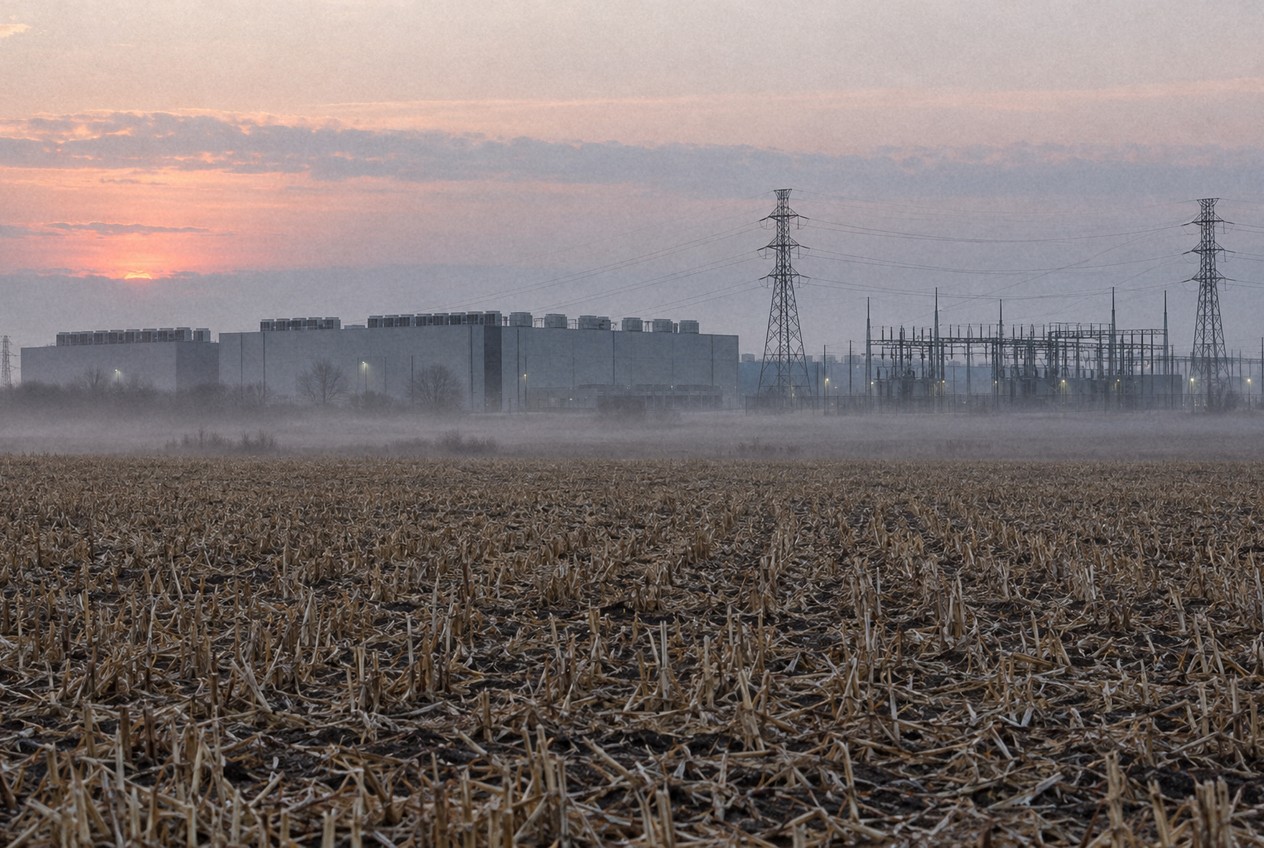
After the midterms, OpenAI will campaign to call its AI data centers “compute campuses,” Axios reports; Tuesday’s ballots carry 41 local measures on data centers.
SAN FRANCISCO, Nov. 1 — Right after Tuesday’s midterm elections, OpenAI plans a policy and public-relations blitz that includes an effort to rebrand its data centers as “AI compute campuses,” Axios reported on Sunday. It will begin in the lame-duck session of Congress, which opens Nov. 9.
An OpenAI spokesperson confirmed the new name to Business Insider the same day. “Compute campuses better describes the scale and role of the infrastructure we’re building for AI,” the spokesperson said. “These are long-term investments in computing, energy infrastructure and skilled work.”
The name is part of an answer to a backlash. OpenAI hopes to stem the “nationwide, bipartisan backlash” against data centers by offering “new community compacts and commitments,” Axios reported, and will propose state legislation “that gives people a meaningful say in how projects are built and what benefits they receive.” In a rebranding Axios called “intentionally provocative,” OpenAI will argue that what it builds, “in contrast to legacy data centers,” should be called compute campuses that can “economically transform host communities.”
Ballotpedia counts at least 50 local ballot measures on data centers this year, 41 of them on Tuesday’s ballots and 21 in Ohio. In a Pew Research Center survey conducted July 20 to Aug. 9, 54 percent of U.S. adults said data centers were mostly bad for the environment, up from 39 percent in January.The PollPew found the shift in every group it reported: Republicans and Republican leaners, from 31 to 47 percent; Democrats and Democratic leaners, from 50 to 62; rural adults, most of all, from 32 to 50.
“We think the conversation is good and healthy,” Chris Lehane, OpenAI’s chief global affairs officer, told Axios. “It’s democracy in action. Communities should hold companies responsible and accountable so they really and truly get a transformative benefit from these projects.”
The Ohio Example
As its example, OpenAI points to a project in Pike County, in Ohio’s Appalachian region, Axios reported. In August, OpenAI said it had agreed to secure about 8 gigawatts of IT capacity at the PORTS-Pike Technology Campus, partly on remediated Energy Department land. SB Energy will build, own and operate the data center under a 20-year lease to OpenAI.
OpenAI’s announcement, dated Aug. 17, said the project would pay its own energy and infrastructure costs, and promised a $40 million community fund, besides SB Energy’s $40 million, and an “Ohio Community Compact” shaped with residents. The site was already a campus by name; the announcement also called it the PORTS-Pike Technology Data Center.The JobsOpenAI’s announcement put construction jobs at 35,000 over a buildout through 2032, and long-term operating jobs at 2,500. The project’s website, checked on Monday, lists 26,000 and 2,500. The first 800 megawatts are expected in 2028; further development will require new power plants, including natural-gas generation, and new transmission lines, the announcement said, and depends on permits, environmental reviews and financing.
Speed Limits
OpenAI also plans to unveil ideas for “mandatory safeguards for the most powerful AI systems,” Axios reported: “speed limits for AI that will allow humans to keep their hands on the wheel,” along with “a more aggressive congressional drive.” “Our belief is people should always remain in control of this technology,” Mr. Lehane said.
Axios gave no detail of the limits. OpenAI’s Sept. 21 post, which Axios links to as an earlier proposal, called for international technical standards that “would not be licenses, mandatory prerelease review, or approval requirements for AI models,” and that should not make it “harder for new entrants or open-weight developers to compete.” The post left national governments to decide whether and how to incorporate those standards into their law.
AI companies “will face a harsher Washington after Tuesday, when Democrats will likely win the House,” Axios wrote. “I don’t think it’s going to be good enough just to say ‘AI bad,’” Mr. Lehane said, after predicting that AI would be “the issue in 2028.”
Tuesday’s local votes come first. Axios named no state where OpenAI would propose its legislation, and quoted no bill text.
Axios disclosed that it has a content licensing and technology agreement with OpenAI.
Daily Cortex is written with AI models, including Anthropic’s Claude, and fact-checked with OpenAI’s GPT models.
Sources
- Axios, “Behind the Curtain: OpenAI’s post-election power play,” Nov. 1, 2026.
- Business Insider, “OpenAI wants everyone to call AI data centers ‘compute campuses’,” Nov. 1, 2026.
- OpenAI, “OpenAI joins PORTS-Pike project,” Aug. 17, 2026.
- SB Energy (PORTS-Pike Technology Campus), “PORTS-Pike Technology Campus,” Nov. 2, 2026.
- OpenAI, “Building standards for the next phase of AI,” Sept. 21, 2026.
- Pew Research Center, “Across groups, Americans are now more likely to say data centers are bad for the environment,” Sept. 22, 2026.
- Ballotpedia, “Data center-related ballot measures, 2026,” Nov. 2, 2026.