The Lame Duck
Senate Moves to Close Debate on Data-Center Bill
The majority leader filed cloture on the bill making data centers pay for grid upgrades; two 60-vote tests could come as soon as Friday.
WASHINGTON, Nov. 11 — Sen. John Thune of South Dakota, the majority leader, filed cloture at 12:29 p.m. Wednesday on the bipartisan permitting bill that would make data centers pay for their grid upgrades, setting up two 60-vote tests on whether to end debate. He filed two motions, by the Senate Press Gallery’s floor log: one on the Capito substitute amendment, No. 6883, and one on H.R. 2347, the House bill the Senate is using as its vehicle.
The Senate voted 62–21 on Tuesday to take the bill up. There were no roll-call votes on Wednesday, Veterans Day, according to the Senate Democrats’ wrap-up. Now amendments are on a clock: “The first degree filing deadline for amendments to the substitute and the underlying bill is 1:00pm Thursday, November 12,” the Democrats’ schedule says.
Each motion needs three-fifths of the senators duly chosen and sworn, or 60 votes if no seat is vacant, according to the Congressional Research Service.Why Two MotionsOnce cloture is invoked on a bill, amendments that are not germane to it fall. Invoking cloture on a substitute first protects it from that test; the Senate may then have to invoke cloture again on the bill as amended, CRS explains. Under the rule CRS describes, a cloture vote comes one hour after the Senate convenes on the second calendar day after filing: for these motions, Friday if the Senate sits, unless senators agree by unanimous consent to another time.
No time had been announced for either vote when this paper checked the Press Gallery’s log and the Democrats’ schedule at 5:21 a.m. Thursday. Ahead of the bill on the Democrats’ list of cloture filings are three judicial nominations, filed Tuesday; the vote on the first, Gregory Cook’s, is set for about 1 p.m. Thursday.
On the floor Wednesday, Mr. Thune pressed for speed. “We have a bipartisan agreement that has support from the president,” he said, in remarks his office posted as delivered. “We should waste no time delivering this win for the American people.”
We should waste no time delivering this win for the American people.
The Stakes
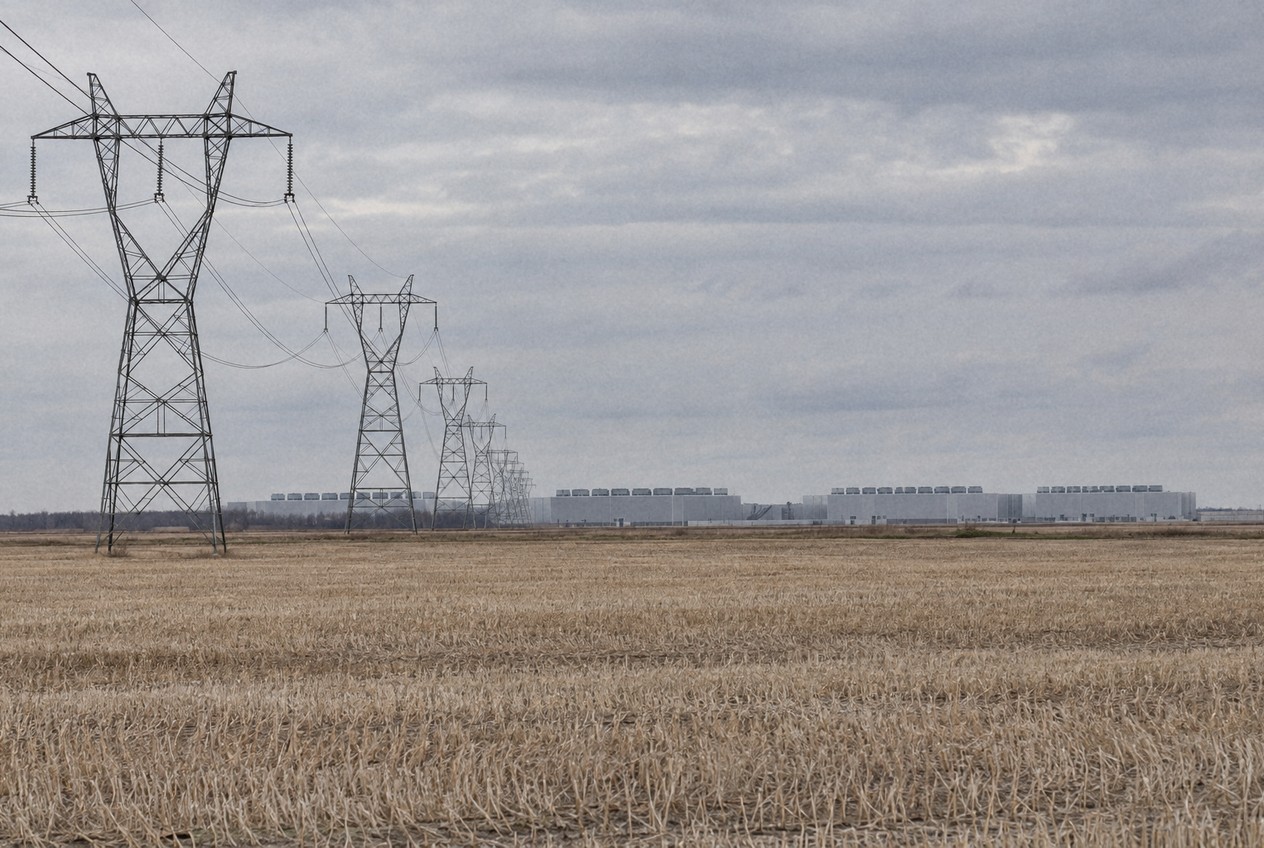
The bill is meant to settle who pays to connect the data-center boom to the grid. Grid Strategies estimated in a white paper that $55 billion in transmission costs could be collected from data centers over 10 years under the bill, $35 billion more than they might otherwise pay under current policy.The EstimateGrid Strategies says the white paper was developed with support from Arnold Ventures. Utilities would charge data centers more for transmission and use the extra to cut other customers’ charges, by the firm’s account. “Data centers connecting to the grid at scale will bear their own transmission costs,” the White House budget office said in its Nov. 9 statement backing the bill.
The Other Side
Sen. Josh Hawley of Missouri called for a moratorium on data-center construction, The Hill reported Wednesday, calling him the first Republican senator to seek one nationwide. “Senate Republicans trying to figure out what to do in the next 6 weeks? Here you go: DEFUND Planned Parenthood, MORATORIUM on data centers, SUSPEND the gas tax, FUND rural hospitals, SAVE AMERICA ACT,” Mr. Hawley wrote on X, as quoted by The Hill. He voted on Monday for cloture on taking up the bill, and did not vote on Tuesday, the Senate’s rolls show.
The public has soured too. In a Pew Research Center survey taken July 20 to Aug. 9, 60 percent of American adults said they would be not too or not at all comfortable with a new data center in their area, including 54 percent of Republicans and 68 percent of Democrats.
Among the amendments filed so far are three from Sen. Ted Cruz, a Texas Republican, submitted Nov. 10. Congress.gov does not yet show their purpose, which it displays only once an amendment is proposed.
The Senate is working against the calendar: in January, Democrats take majorities in both chambers, and the Associated Press reported on Tuesday that they were on track to hold 54 Senate seats.
Sources
- U.S. Senate Press Gallery, “Floor log, Wednesday, November 11, 2026,” Nov. 11, 2026.
- Senate Democratic Leadership, “Schedule for Thursday, November 12, 2026,” Nov. 11, 2026.
- Senate Democratic Leadership, “Wrap Up for Wednesday, November 11, 2026,” Nov. 11, 2026.
- Senate Republican Leader, “Thune: Important Work Remains for Senate Republicans (remarks as delivered),” Nov. 11, 2026.
- Congressional Research Service, “Report RS 98-425, on invoking cloture in the Senate.”
- Congress.gov, “S.Amdt.6849 to H.R.2347, 119th Congress,” Nov. 10, 2026.
- Congress.gov, “S.Amdt.6850 to H.R.2347, 119th Congress,” Nov. 10, 2026.
- Congress.gov, “S.Amdt.6851 to H.R.2347, 119th Congress,” Nov. 10, 2026.
- U.S. Senate, “Roll Call Vote 119th Congress, 2nd Session, Vote Number 258: On the Motion to Proceed (Motion to Proceed to H.R. 2347),” Nov. 10, 2026.
- U.S. Senate, “Roll Call Vote 119th Congress, 2nd Session, Vote Number 257: On Cloture on the Motion to Proceed (Motion to Invoke Cloture: Motion to Proceed to H.R. 2347),” Nov. 9, 2026.
- The Hill (via AOL), “Hawley calls for Senate to pass data center moratorium,” Nov. 11, 2026.
- Pew Research Center, “More Americans now say data centers are negative for the environment, energy costs and more,” Sept. 22, 2026.
- Grid Strategies, “Grid Funding from Data Centers in the Bipartisan American Affordability and Jobs Act (BAAJA),” Nov. 2, 2026.
- Office of Management and Budget, “Statement of Administration Policy: S. 5653 – Bipartisan American Affordability and Jobs Act of 2026,” Nov. 9, 2026.
- The Associated Press, “More than a dozen key races remain too early to call one week after Election Day,” Nov. 10, 2026.