Robotaxis
Tesla Grades Its Robotaxis, by Its Own Rules
Tesla says its robotaxis drove 3.1 million miles with no safety monitor aboard and injured no one, by rules it set; its own file lists 32 collisions.
AUSTIN, Tex., Oct. 21 — Tesla has published a report card for its robotaxis, with grading rules of its own. In 3.1 million miles with no safety monitor aboard through Oct. 18, Tesla’s new Robotaxi Safety Report says, no one was injured “in a collision in which Robotaxi made first contact,” no Robotaxi airbag deployed and no pedestrian or cyclist was hit.
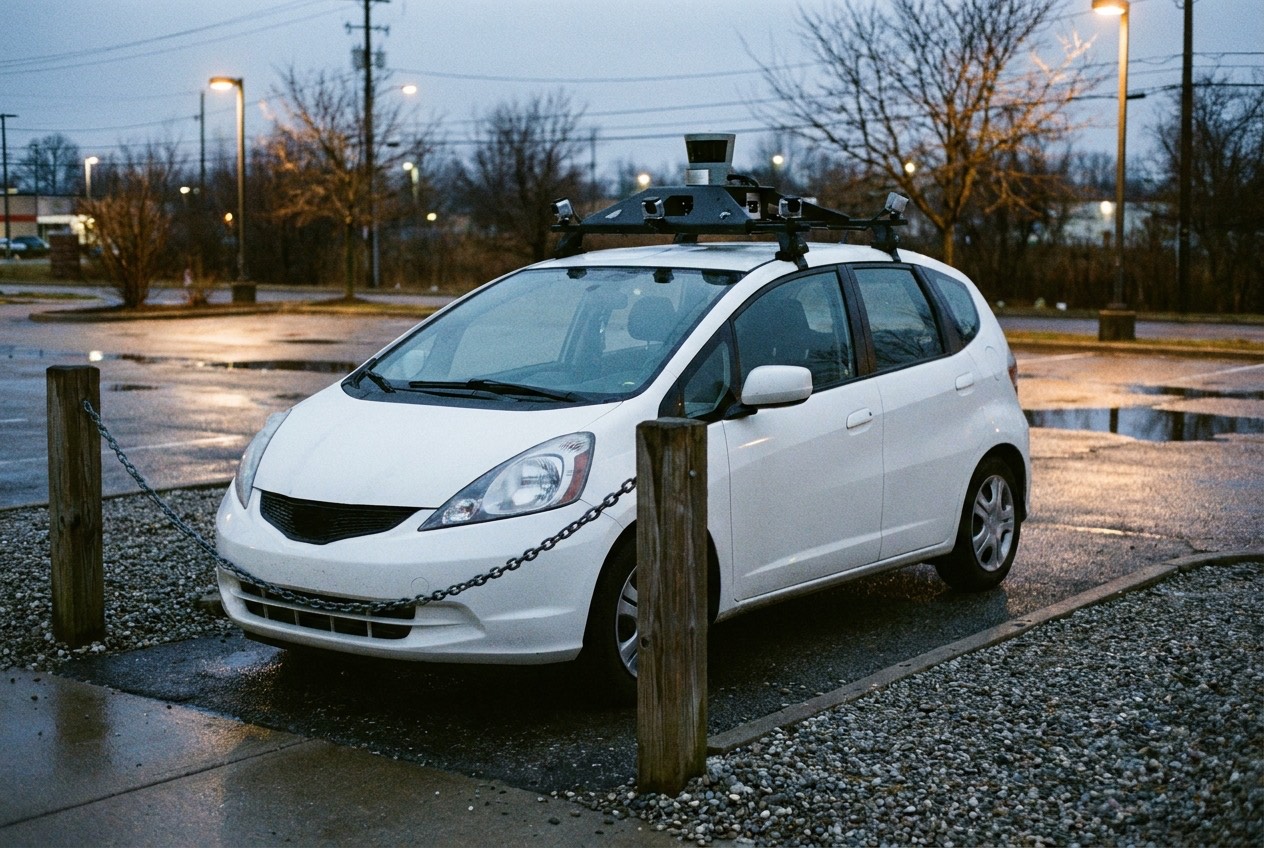
The spreadsheet behind it lists 32 collisions that Tesla reported to the National Highway Traffic Safety Administration in those miles.The OrderNHTSA’s Standing General Order covers collisions on publicly accessible roads when an automated driving system was engaged at any time in the 30 seconds before the crash, “including many with only minor property damage,” Tesla’s report says. By Daily Cortex’s count, 15 involved fixed objects, six of them chains strung across parking-lot entrances and exits, and three involved remote assistance.
Tesla posted the report on Wednesday, the day it reported its third quarter, and listed Las Vegas, Jacksonville, Phoenix and San Antonio as “Coming Soon,” without dates. The miles are concentrated: 95 percent were in Austin, Dallas and Houston, and more than two-thirds in Austin alone. The page names no outside reviewer of its figures.
Tesla says its results “stand on their own,” but offers Texas police reports as “useful context.” Those for 2024 show, it says, that people driving Robotaxi’s 2.95 million miles in those cities would have had about 9.1 collisions in which someone was injured, a figure that includes the roughly 32 percent of injury collisions never reported to police. But Tesla’s human benchmark is built differently: police reports do not record which vehicle made first contact, so its human figures for injuries and for pedestrians or cyclists count every such collision, while its robotaxi figures count only those in which a robotaxi made first contact.
Two entries in the file mention a hospital, and Tesla counts neither as an injury. On Oct. 10 in Dallas, an SUV hit by a passenger car was pushed into a robotaxi waiting at a stop sign, and the car’s driver was taken to a hospital; nobody in the robotaxi or the SUV was hurt, Tesla says. On Sept. 26 a rider “alleged they sought medical care” after a robotaxi drove over a pothole at about 29 mph in a Dallas work zone; Tesla says an investigation found no injury.
The other 30 are listed as property damage, with no injury reported. In 16 of the 17 collisions with other vehicles, the other vehicle struck the robotaxi, usually from behind or while backing up. Apart from the pothole, the file puts the robotaxi’s speed at 6 mph or less in every collision. Tesla counts the three that involved remote assistance; those hit a hidden tree stump, a dumpster and a parked SUV, and the reports on the last two say a remote operator was controlling the car.
The report leaves out collisions with a safety monitor in the car, “most of them before 22 Jan 2026,” Tesla says, and the miles driven that way. One such collision, NHTSA’s public data show, is a Cybercab’s drive into a water-filled pothole in an Austin parking lot in August. Each entry in Tesla’s file carries the company’s account of what happened.Redacted Until MarchIn NHTSA’s public data, the accounts in Tesla’s robotaxi reports filed from August 2025 through February read “[REDACTED, MAY CONTAIN CONFIDENTIAL BUSINESS INFORMATION].” Updates filed in March say they only remove confidential or personally identifying information “to make the incident narrative publicly available.”
On Monday, Oct. 26, the Federal Register publishes NHTSA’s proposal to allow optional cyan marker lamps on automated vehicles, which the agency says would reduce confusion by “making clear that cyan lights mean a vehicle is being operated without the expectation that a human occupant is monitoring the roadway.” Comments are due Nov. 25.
Tesla’s answers to the agency’s special order on how it certified the Cybercab are due Friday, Oct. 30. Since Oct. 9 NHTSA has also been reviewing a petition alleging that Tesla’s robotaxis exceed posted speed limits in active school zones; the agency counts four incidents, none of them a crash.
Sources
- Tesla, “Robotaxi Safety Report.”
- Tesla, “Robotaxi SGO reportable events, Jan. 22–Oct. 18, 2026 (spreadsheet).”
- National Highway Traffic Safety Administration, “Standing General Order on Crash Reporting.”
- National Highway Traffic Safety Administration, “SGO 2021-01 incident reports: automated driving systems (data file),” Oct. 15, 2026.
- Federal Register (National Highway Traffic Safety Administration), “Federal Motor Vehicle Safety Standards; Modernization of FMVSS No. 108 To Accommodate ADS-Equipped Vehicles (proposed rule),” Oct. 26, 2026.
- National Highway Traffic Safety Administration, “Audit Query AQ26002, opening resume: Tesla Cybercab FMVSS Certification,” Sept. 3, 2026.
- National Highway Traffic Safety Administration, “AQ26002: Special Order Response Extension (memorandum to file),” Sept. 29, 2026.
- National Highway Traffic Safety Administration, “ODI Resume, DP26010: Exceeds posted speed limits in active school zones,” Oct. 9, 2026.
- Tesla, Inc. (SEC Form 8-K, Exhibit 99.1), “Q3 2026 Update,” Oct. 21, 2026.
- TeslaNorth, “Tesla’s New Robotaxi Safety Report Names Four Cities Coming Next,” Oct. 21, 2026.
- Not a Tesla App, “Tesla Names Next Robotaxi Cities, Shares Miles Driven & Safety Data,” Oct. 21, 2026.