Power
xAI’s Turbines Are Not ‘Mobile,’ Judge Rules; Suit Proceeds
A judge refused to dismiss the NAACP’s suit over xAI’s Mississippi turbines, at least 495 megawatts by the complaint’s count, ruling they are not permit-exempt ‘mobile sources.’
OXFORD, Miss., Oct. 30 — A federal judge in Mississippi refused on Friday to dismiss the NAACP’s Clean Air Act suit against xAI, ruling that the gas turbines powering its Colossus 2 data center are not “mobile sources” exempt from air permits. Judge Debra M. Brown also rejected xAI’s arguments that the NAACP could not sue for its members and that citizen suits are unconstitutional.
The ruling decides only that the case goes on. On a motion to dismiss, a court takes the complaint’s allegations as true and makes no findings, and the NAACP’s request to shut the turbines down while the case proceeds still awaits a decision.Rule 12(b)(6)xAI and its subsidiary moved on June 15 to dismiss under this rule, which tests a complaint for “failure to state a claim upon which relief can be granted.” On such a motion the court must “accept all well-pleaded facts as true and construe the complaint in the light most favorable to the plaintiff,” the order says, quoting the Fifth Circuit.
Judge Brown held that a July 2025 letter in which Mississippi’s environmental regulator called the turbines “mobile” and “temporary,” and so exempt from permits, is not consistent with the state’s air plan and does not alter her reading. The companies had said they relied on the letter, from the Mississippi Department of Environmental Quality, or MDEQ. The ruling keeps alive the NAACP’s demand for civil penalties of up to $124,426 a day for each violation, payable to the Treasury, and for an order requiring the best available pollution controls. xAI has been part of SpaceX since February.
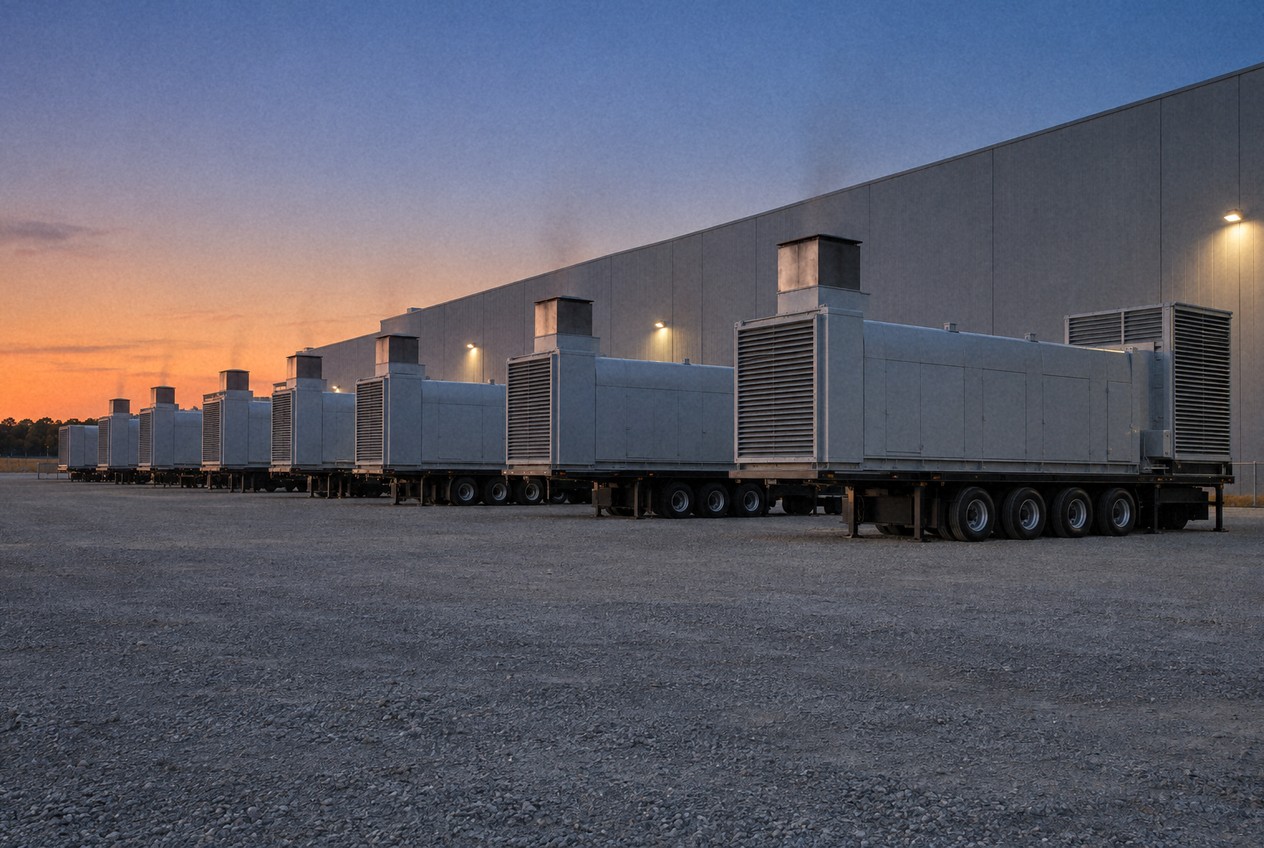
The complaint says xAI and MZX Tech, its wholly owned subsidiary, installed the turbines in Southaven between Aug. 1 and Dec. 18, 2025, and that at least 27 stood on site as of April 7, with a combined generating capacity of at least 495 megawatts.The CountFourteen SMT-130s of 13 megawatts each, one 25-megawatt M35 and twelve TM 2500s, four of 22 megawatts and eight of 25, as the order recites the complaint. The figures sum to 495 megawatts. It puts their potential emissions at about 1,700 tons a year of nitrogen oxides, a primary cause of smog, and 580 tons of carbon monoxide, 180 of fine particulate matter and 19 of formaldehyde. The plant supplies power to Colossus 2, across the state line in Memphis, it says.
Mobile and Temporary
Mississippi’s air plan, which the EPA approved, excludes “mobile sources” from permits but does not define them. Judge Brown found that it adopts federal rules under which a mobile source is “a motor vehicle, nonroad engine or nonroad vehicle,” and an engine covered by the federal standards for new stationary sources is not a nonroad engine.
Those standards reach stationary combustion turbines with a peak heat input of 10 million Btu an hour or more, and the definition anticipates the trailer: such a turbine is “not self-propelled or intended to be propelled while performing its function. It may, however, be mounted on a vehicle for portability.” Each turbine at the plant exceeds the threshold, the complaint says, so on its allegations, she held, they are not mobile sources.
The companies argued that they “reasonably relied on MDEQ’s determination that the temporary portable turbines were exempt.” Judge Brown wrote that nothing in the Clean Air Act gives state agencies alone the power to say what a state’s plan authorizes, and that under Mississippi law courts do not defer to agencies’ readings of statutes.
Of the letter’s other condition, that each turbine stay on site “for less than twelve (12) months,” she wrote in a footnote: “It is unclear why the length of time the turbines remain on-site is relevant to permitting requirements.”
It is unclear why the length of time the turbines remain on-site is relevant to permitting requirements.
She gave the companies one point. MDEQ “fairly notified the defendants of its interpretation,” she wrote, and the fair-notice doctrine might apply if the agency later tried to enforce permits against them. But there is no sign it has changed its position, and its reading neither bars the NAACP’s contrary one nor binds the court.
Whose Power
xAI also argued that the citizen-suit provision hands the executive branch’s enforcement power to private parties, in breach of Article II. The Justice Department, which joined the case on Oct. 19, leans on Article II too: its Oct. 23 crossclaim says the Constitution vests the power to seek civil penalties on behalf of the United States “conclusively and preclusively in the Executive Branch.”
“Because citizen suit plaintiffs sue on their own behalf, in their own name, and seek penalties that redress harm to themselves, they are not exercising the federal government’s executive power,” Judge Brown wrote. She has yet to rule on the crossclaim, which the NAACP answered on Friday.
“Our position has been clear: xAI cannot operate gas turbines without the required permits,” Abre’ Conner, the NAACP’s director of environmental and climate justice, said in a statement released by Earthjustice, one of the groups representing the NAACP. By Saturday morning xAI had published no response to the ruling that Daily Cortex could find. SpaceX’s Oct. 22 quarterly report describes the machines as “mobile gas turbines powering the COLOSSUS II data center with the permission of the Mississippi Department of Environmental Quality.”
Also on Friday, the government and the NAACP filed a joint stipulation to dismiss the government’s Fifth Circuit appeal, a day after that court set a Dec. 8 deadline for its opening brief.
Under the federal rules, xAI and MZX Tech ordinarily have 14 days to answer the complaint. Still undecided is whether the turbines must stop while the case goes on: the NAACP’s motion for a preliminary injunction has been fully briefed since July, and an evidentiary hearing set for Aug. 24 was put off “until further notice.”
Sources
- U.S. District Court for the Northern District of Mississippi, “NAACP v. X.AI Corp., No. 3:26-cv-00074-DMB-JMV, Opinion and Order denying the defendants’ motion to dismiss (Doc. 139),” Oct. 30, 2026.
- U.S. District Court for the Northern District of Mississippi, “NAACP v. X.AI Corp., No. 3:26-cv-00074-DMB-JMV, United States’ Complaint for Declaratory Relief (Doc. 136),” Oct. 23, 2026.
- CourtListener (RECAP), “Docket: National Association for the Advancement of Colored People v. X.AI Corp., No. 3:26-cv-00074 (N.D. Miss.).”
- CourtListener (RECAP), “Docket: NAACP v. X.AI, No. 26-60806 (5th Cir.).”
- Earthjustice, “Court Denies xAI’s Motion to Dismiss Air Pollution Lawsuit Against Elon Musk’s company,” Oct. 30, 2026.
- SpaceX (Form 10-Q, U.S. Securities and Exchange Commission), “Quarterly report for the quarter ended Sept. 30, 2026,” Oct. 22, 2026.
- xAI, “News: Research, Product & Company Updates (newsroom index, checked for a statement on the ruling; latest post Oct. 27),” Oct. 31, 2026.
- Legal Information Institute, Cornell Law School, “Federal Rules of Civil Procedure, Rule 12.”