Cash Flow
Alphabet Sells Its Chips and Outspends Its Cash Flow
Alphabet’s spending left free cash flow negative for a second quarter, at minus $9.1 billion, as Google Cloud doubled; its shares fell about 10 percent after hours.
MOUNTAIN VIEW, Calif., Oct. 28 — Alphabet spent more on its build-out than its operations brought in for a second quarter running, and its shares fell about 10 percent in after-hours trading on Wednesday. It paid $51.4 billion for property and equipment in the third quarter, more than twice the $24.0 billion of a year earlier, against $42.3 billion of cash from its operations. Its free cash flow was negative $9.1 billion, after negative $5.9 billion in the second quarter.
In the same quarter Google Cloud’s revenue rose 103 percent, to $30.7 billion, and Alphabet said sales of its TPU systems, the computers built around Google’s custom AI chips, were “a meaningful contributor” to the growth.
“Alphabet’s second straight quarter of negative cash flow was a sharp turn for a company that was long one of the tech sector’s most prolific cash generators,” Reuters wrote. Meanwhile Alphabet issued $28.7 billion of notes and sold $12.4 billion of new shares in the quarter, and it has bought back no stock this year. That puts more of the bill on shareholders, who got $39.8 billion of buybacks in the first nine months of 2025. Suppliers gain: about 65 percent of the quarter’s technical-infrastructure spending went to servers and networking equipment, Anat Ashkenazi, the chief financial officer, said on the call, according to a transcript published by The Motley Fool; unless another source is named, quotations from the call in this story use the Fool’s transcript. Broadcom works with Google on the TPUs, CNBC has reported.
Alphabet kept its forecast of $195 billion to $205 billion of capital spending for 2026, which leaves about $63 billion to $73 billion for the fourth quarter, by this paper’s arithmetic, and Ms. Ashkenazi said again on the call that spending would “increase significantly in 2027,” as CNBC also reported. She gave no figure.
The Chips
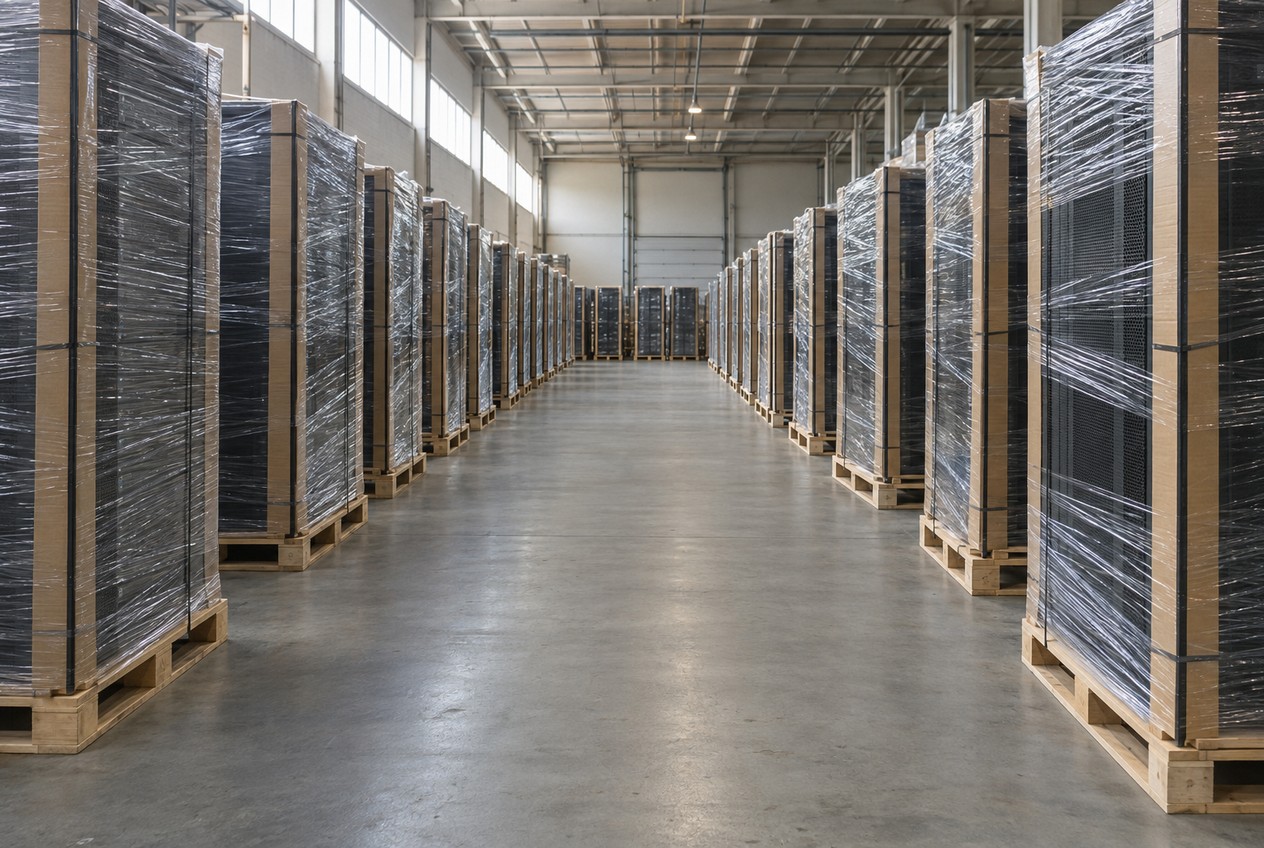
The TPU is now a product line. Alphabet’s release says Google Cloud “generates product revenues primarily from the sale of TPU systems,” and Ms. Ashkenazi said she expected those sales to keep scaling in the fourth quarter, “followed by a meaningful revenue ramp in 2027.”The TPU SystemA TPU system “is not just a chip, but it’s a complete system,” Thomas Kurian, Google Cloud’s chief executive, said on the call, by the Fool’s transcript: Google’s accelerators with the hardware, networking and software around them. Nearly 100 customers use TPUs, he said, among them Apple and Anthropic, with which Google works “both directly and via Broadcom.”
Selling hardware changes how the cash moves. When Google signs a contract for TPU systems, Ms. Ashkenazi explained, the order goes first into its backlog; then Google builds the systems, and the cash comes in as they are delivered and billed. “We build the inventory ahead of getting the revenue stream in,” she said. Building TPU systems before they are sold has swollen Alphabet’s inventory, to $13.3 billion at Sept. 30 from $2.4 billion at the end of 2025. Thomas Kurian, Google Cloud’s chief executive, said Google buys the components for that inventory only after contracts are signed.
Google Cloud’s operating income more than tripled, to $11.1 billion, a margin of 36.2 percent against 23.7 percent a year earlier. Alphabet does not break out its margin on TPU systems; before the report, TD Cowen estimated it at 20 percent, against about 35 percent for the whole cloud business in the second quarter, CNBC reported. And Ms. Ashkenazi said that, given “the supply constrained environment,” Google “started utilizing third-party compute capacity at the end of Q3,” and she warned of “margin headwinds in the near term.”
The Cash
Operating cash flow fell to $42.3 billion, from $48.4 billion a year earlier, held down, Ms. Ashkenazi said on the call, by the inventory build and a $5.2 billion payment of a 2018 European Commission fine. Without the fine, free cash flow would still have been negative, by about $3.9 billion, by this paper’s arithmetic.Free Cash FlowAlphabet defines it as cash from operations less capital expenditures, a measure outside generally accepted accounting principles. From the third quarter of 2024 through the first quarter of 2026 its lowest quarterly figure was $5.3 billion, and over the 12 months through September it was still positive, at $19.7 billion. Reuters noted that the second quarter’s figure was Alphabet’s first negative one in 22 years as a public company.
Alphabet · Cash Flow
Alphabet spends past its cash
Alphabet’s operating cash flow and its purchases of property and equipment by quarter, in billions of dollars, and beneath them its free cash flow: the first less the second.
Free cash flow as Alphabet defines it, a measure outside generally accepted accounting principles: net cash provided by operating activities less purchases of property and equipment, its capital expenditures. Each quarter as reported in its own earnings release. Rounded from millions, so a quarter’s free cash flow can differ by a tenth from its two parts.
The $28.7 billion of notes were senior unsecured; the $12.4 billion of shares, 12 million Class A and 24 million Class C, were sold through an at-the-market program.The ProgramUnder the program, described in Alphabet’s second-quarter release, it may sell up to $40.0 billion of Class A and Class C stock through sales agents over time. It said then that the proceeds were “primarily intended to be used to meet tax obligations associated with employee equity grants.” It had sold none by June 30; $27.6 billion remained available at Sept. 30. Long-term debt rose to $125.1 billion, from $46.5 billion at the end of 2025, and shares outstanding to 12.29 billion, from 12.09 billion, after a $49.6 billion sale of common and mandatory convertible preferred stock in June. Alphabet is not short of money: it ended September with $265.1 billion of cash and marketable securities, including $90.4 billion of marketable equity securities, Ms. Ashkenazi said.
Its obligations run further ahead. Google Cloud’s backlog was $561 billion, and Alphabet expects to recognize just over 55 percent of it as revenue within 24 months. Alphabet had $924 billion of future purchase commitments and $152 billion of “pre-commencement leases and other obligations,” Ms. Ashkenazi said on the call, by the Fool’s transcript; those are maximum contractual obligations, she added, and some agreements have variable pricing and volume that “could result in lower spend.”
The Shares
Revenue rose 25 percent, to $127.6 billion, short of the $128.2 billion analysts expected, by LSEG’s consensus as CNBC and Reuters reported it. Search and other revenue rose 12 percent, to $63.35 billion, against an estimate of $64.96 billion, CNBC reported, though Alphabet said search queries grew at their fastest year-over-year rate in five years. Philipp Schindler, the chief business officer, said currency moves did most to slow search growth from the second quarter, and that AI Mode, which so far earns less from ads, also weighed.
Operating income rose 30 percent, to $40.6 billion. Diluted earnings per share fell to $2.12, from $2.87, on a swing in the value of Alphabet’s investments: an $8.7 billion loss on equity securities, against a $10.7 billion gain a year earlier. The loss cut earnings per share by 55 cents, the release said, and Ms. Ashkenazi said the quarter’s loss in other income came primarily from a fall in the stock price of SpaceX, in which Alphabet has invested.
Alphabet’s Class A shares closed Wednesday at $324.89, up 1.34 percent, before the report. They ended after-hours trading, at about 8 p.m. Eastern, near $292.50, and stood at $291.73 in pre-market trading at 5:29 a.m. Thursday, 10.2 percent below the close.GOOGLNasdaq279.84▼3.98−1.4%Alphabet · Friday’s session If Alphabet’s shares close more than 9.77 percent lower on Thursday, it would be their worst reaction to an earnings report ever, CNBC reported; the company went public in 2004. Microsoft, which reported minutes later and kept its free cash flow positive, was up more than 3 percent in pre-market trading at 5:32 a.m.
“Cloud is carrying the story, but until search shows AI is additive, the stock’s probably going to trade lower,” Dave Wagner, a portfolio manager at Aptus Capital Advisors, said, as quoted by Reuters. Investors were nervous about a big jump in 2027, Reuters reported. “A $300-billion (capex) number could potentially scare the market because free cash flow now is finally negative,” said Jeremy Saltsburg, senior investment officer at Check Capital, as quoted by Reuters. The figure is his, not Alphabet’s.
Earlier on Wednesday Google introduced Gemini 4 Carbon, which Artificial Analysis, a firm that benchmarks AI models, placed first on its Intelligence Index at 59, a point ahead of Anthropic’s Claude Opus 5.5; the firm said Carbon was “not leading in coding and knowledge work,” and Google is releasing it first to “a subset of cyber defenders.”The IndexVersion 5 of the Artificial Analysis Intelligence Index, launched Oct. 27, combines nine evaluations, and for the first time the majority of it is built on private datasets, the firm says. Carbon has the top score on four of the nine. Analysts at Bernstein asked in a note, Reuters reported: “Did Google rush the deployment of Gemini 4 models as an offset to softer financial metrics?”
Alphabet’s answer is demand. Its model APIs are processing nearly 32 billion tokens a minute, more than four times as many as a year earlier, said Sundar Pichai, its chief executive. “We are working hard to bring more capacity online to meet this long-term demand,” he said in remarks the company published. Ms. Ashkenazi said on the call, by the same transcript, that Alphabet expects its return on invested capital to remain “meaningfully above our cost of capital” through the investment cycle, and warned that its spending and the TPU inventory “will put pressure on free cash flows.”
We are working hard to bring more capacity online to meet this long-term demand.
Amazon, which runs the largest cloud business, reports after the market closes today, with a call at 5 p.m. Eastern; Alphabet’s quarterly filing with the Securities and Exchange Commission had not appeared by 5:33 a.m. Eastern on Thursday; and Alphabet has promised “further details” on 2027 spending on its fourth-quarter call.
Sources
- Alphabet (SEC Form 8-K, Exhibit 99.1), “Alphabet Announces Third Quarter 2026 Results,” Oct. 28, 2026.
- Google, “Q3 2026 earnings call: Remarks from our CEO,” Oct. 28, 2026.
- The Motley Fool, “Alphabet (GOOGL) Q3 2026 Earnings Call Transcript,” Oct. 29, 2026.
- Alphabet, “Third quarter 2026 earnings call (webcast),” Oct. 28, 2026.
- Alphabet (SEC Form 8-K, Exhibit 99.1), “Alphabet Announces Second Quarter 2026 Results,” July 22, 2026.
- Alphabet (SEC Form 8-K, Exhibit 99.1), “Alphabet Announces Third Quarter 2025 Results,” Oct. 29, 2025.
- Alphabet (SEC Form 8-K, Exhibit 99.1), “Alphabet Announces First Quarter 2026 Results,” April 29, 2026.
- Alphabet (SEC Form 8-K, Exhibit 99.1), “Alphabet Announces Fourth Quarter and Fiscal Year 2025 Results,” Feb. 4, 2026.
- Alphabet (SEC Form 8-K, Exhibit 99.1), “Alphabet Announces Second Quarter 2025 Results,” July 23, 2025.
- Alphabet (SEC Form 8-K, Exhibit 99.1), “Alphabet Announces First Quarter 2025 Results,” April 24, 2025.
- Alphabet (SEC Form 8-K, Exhibit 99.1), “Alphabet Announces Fourth Quarter and Fiscal Year 2024 Results,” Feb. 4, 2025.
- Microsoft (SEC Form 8-K), “Current report, results of operations for the quarter ended Sept. 30, 2026 (accepted 4:04 p.m. Eastern),” Oct. 28, 2026.
- Amazon, “Amazon.com to Webcast Third Quarter 2026 Financial Results Conference Call,” Oct. 15, 2026.
- Alphabet (SEC Form 8-K, Exhibit 99.1), “Alphabet Announces Third Quarter 2024 Results,” Oct. 29, 2024.
- Reuters, via KELO-AM, “Alphabet stock sinks as search woes cause revenue miss, cash burn worsens,” Oct. 28, 2026.
- CNBC, “Alphabet sinks 10% as it holds 2026 capex unchanged, expects significant increase in 2027,” Oct. 28, 2026.
- CNBC, “Alphabet falls 10% in premarket, putting it on course for its biggest ever post-earnings drop,” Oct. 29, 2026.
- CNBC, “Google alters its cloud playbook, enlisting partners to sell more AI chips,” Oct. 28, 2026.
- Google, “Introducing Gemini 4 Carbon,” Oct. 28, 2026.
- Artificial Analysis, “Gemini 4 Carbon is the new #1 on the Artificial Analysis Intelligence Index v5,” Oct. 28, 2026.
- Artificial Analysis, “Announcing Artificial Analysis Intelligence Index v5,” Oct. 27, 2026.
- Yahoo Finance, “Alphabet Class A (GOOGL), five-minute chart data including extended hours,” Oct. 29, 2026.
- Yahoo Finance, “Microsoft (MSFT), five-minute chart data including extended hours,” Oct. 29, 2026.
- U.S. Securities and Exchange Commission (EDGAR), “Alphabet Inc. filings (CIK 1652044),” Oct. 29, 2026.