Southaven
Washington Tries Again to End NAACP’s xAI Turbine Suit
Four days after a judge refused to let it end the NAACP’s suit over xAI’s turbines, Washington asked her to declare the suit cannot proceed over its objection.
OXFORD, Miss., Oct. 23 — The Justice Department asked a federal judge in Mississippi on Friday to declare that the NAACP’s Clean Air Act suit over xAI’s gas turbines in Southaven “cannot proceed against the objection of the United States.” Four days earlier the judge, Debra M. Brown, had ruled that the government could join the case but could not dismiss it.
The filing, a crossclaim against the NAACP, is the pleading she ordered by Friday. It asks the court to declare that the law’s authorization for federal intervention “includes the United States’ right to dismiss NAACP’s citizen suit,” the right Judge Brown found the Clean Air Act does not give.
The argument reaches past Southaven: it holds that the law’s “authorization of federal intervention includes the United States’ right to dismiss a citizen suit.” Neither regulator is pressing a Clean Air Act case against the turbines. Mississippi’s Department of Environmental Quality determined that they needed no Clean Air Act permits under the state’s plan and has “declined any enforcement,” the filing says; the EPA’s administrator “has made no effort to bring the alleged violators into compliance,” Judge Brown wrote.
Earthjustice, which represents the NAACP, calls such suits “an essential backstop — and often a last resort — for communities when government regulators fail to hold polluters accountable.”The Citizen SuitSection 304 of the Clean Air Act, enacted in 1970, lets any person sue “on his own behalf” to enforce it. Judge Brown found it lets the government preclude a suit in only one situation: when the EPA or a state “has commenced and is diligently prosecuting” its own case to require compliance. The penalties the NAACP seeks, up to $124,426 a day for each violation, would be paid not to it but to the Treasury.
The government argues that the Constitution vests the power to seek civil penalties “conclusively and preclusively in the Executive Branch,” and that the NAACP is “seeking to shut off the power supply for Super Intelligence innovation that is essential to the Department of War’s military operations.” Judge Brown had found its national-security concerns irrelevant, and rejected its plea to read the law so as to avoid constitutional doubts: “Constitutional avoidance does not allow the Court to invent a right that does not exist in the statute.”
The government had also appealed to the Fifth Circuit in September, before she ruled.The First TryThe government moved to intervene and dismiss on June 15. Its Sept. 18 appeal treated the court’s delay as a “constructive Order” denying that motion, a description Judge Brown wrote “carries no weight.” On Oct. 19 a panel there denied its request to pause the case “only currently and temporarily,” because the district court “has not fully determined this issue.” xAI and the State of Mississippi had backed the pause.
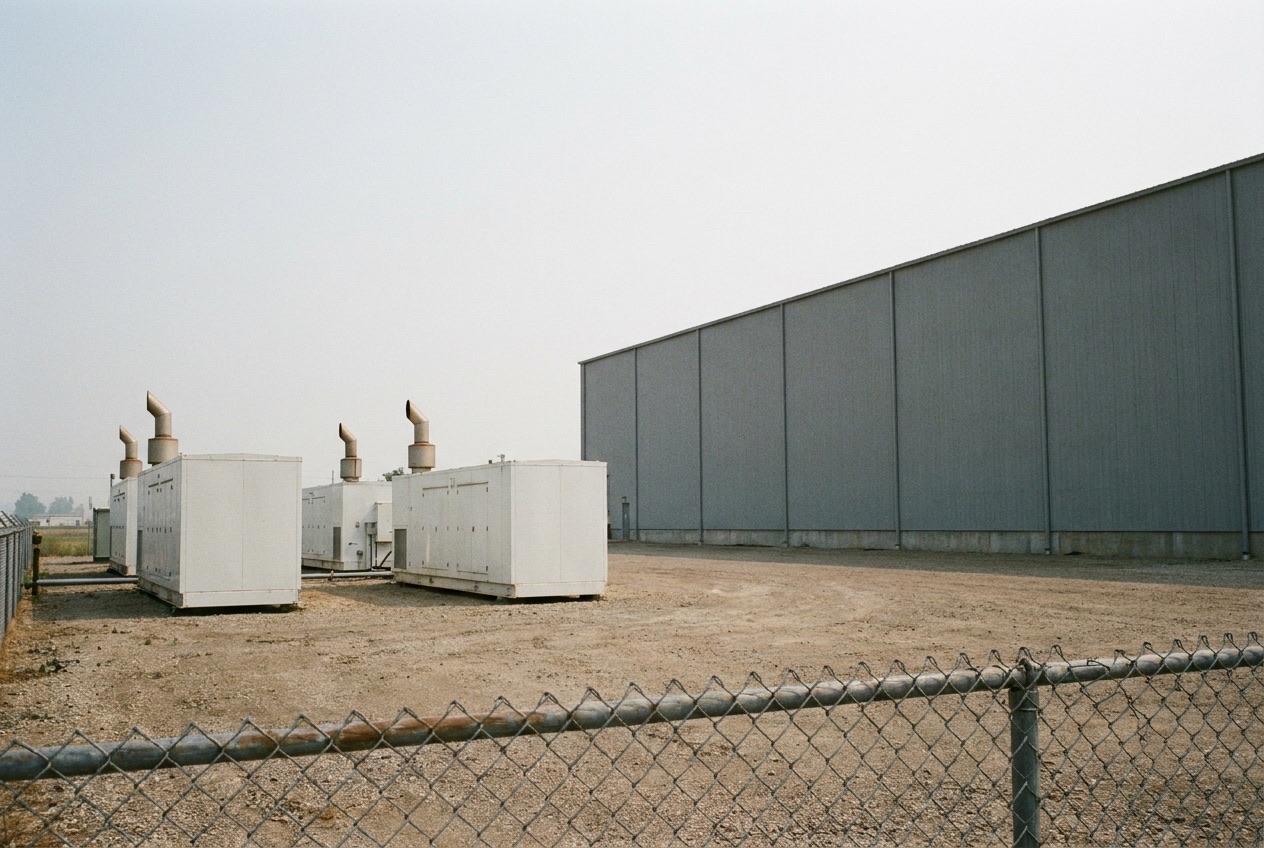
The NAACP sued xAI and MZX Tech, the subsidiary that owns and operates the plant, on April 14, saying the turbines lack required permits and pollution controls; it wants them stopped “unless and until” the companies obtain permits. “Failure to get a permit has serious public health consequences,” its complaint says. xAI opposes a preliminary injunction and has moved to dismiss. SpaceX, which acquired xAI in February, describes them in its Oct. 22 quarterly report as “mobile gas turbines powering the COLOSSUS II data center with the permission of the Mississippi Department of Environmental Quality.”
“The court made clear today that the law applies to everyone, including the federal government,” Abre’ Conner, the NAACP’s director of environmental and climate justice, said in a statement after Monday’s ruling.
The state regulator has acted separately on stormwater permits: in August it issued MZX Tech notices of violation alleging that land-disturbing construction took place at sites before they had stormwater-permit coverage, SpaceX’s report says. It seeks penalties of up to $25,000 a day, with “preliminary claimed exposure of approximately $6.1 million across three sites”; the company said it is in talks to resolve the matters “through a single agreed order.”
The NAACP’s response to the crossclaim, if one is required, is due Oct. 30; still to be decided are xAI’s motion to dismiss and the schedule for a hearing on the NAACP’s request to stop the turbines while the case goes on.
Sources
- U.S. District Court for the Northern District of Mississippi, “NAACP v. X.AI Corp., No. 3:26-cv-00074-DMB-JMV, United States’ Complaint for Declaratory Relief (Doc. 136),” Oct. 23, 2026.
- U.S. District Court for the Northern District of Mississippi, “NAACP v. X.AI Corp., No. 3:26-cv-00074-DMB-JMV, Opinion and Order (Doc. 135),” Oct. 19, 2026.
- U.S. District Court, Northern District of Mississippi, “NAACP v. X.AI Corp., No. 3:26-cv-00074, Complaint (Doc. 1),” April 14, 2026.
- U.S. Court of Appeals for the Fifth Circuit, “NAACP v. X.AI Corp., No. 26-60806, Unpublished Order (Doc. 47-1),” Oct. 19, 2026.
- CourtListener (RECAP), “Docket: National Association for the Advancement of Colored People v. xAI Corp. (N.D. Miss.).”
- CourtListener (RECAP), “Docket: NAACP v. X.AI, No. 26-60806 (5th Cir.).”
- SpaceX (Form 10-Q, U.S. Securities and Exchange Commission), “Quarterly report for the quarter ended Sept. 30, 2026,” Oct. 22, 2026.
- Earthjustice, “Judge throws out U.S. DOJ attempt to deny communities’ day in court against Musk’s company, xAI,” Oct. 20, 2026.
- Earthjustice, “NAACP Sues xAI for Illegal Pollution from Data Center Power Plant,” Apr. 14, 2026.