Robotaxis
Waymo Is Said to Plan a Fivefold Fleet
Waymo aims to have 20,000 robotaxis by the end of 2027, five times today’s fleet, Semafor reported; it also aims to carry riders in Madrid in 2027.
MOUNTAIN VIEW, Calif., Oct. 20 — Waymo, which has about 4,000 robotaxis, aims to have 8,000 by the end of this year and 20,000 by the end of 2027, Semafor reported on Monday, citing people familiar with the matter. Waymo declined to comment to Semafor. On Semafor’s reported figures, the fleet would reach five times its current size in about 14 months.
On Tuesday Waymo said it was coming to Spain, beginning with the Region of Madrid, where it aims to welcome its first riders in 2027.
Waymo plans to use the $5 billion it borrowed this month, its first debt, to enlarge the fleet, Semafor reported. The loan came without guarantees from Alphabet, Waymo’s parent, and lets Waymo borrow more later by securitizing leases on its fleet, Semafor said.
If the targets Semafor reported are met, those cars would have to be bought, financed, charged, cleaned and maintained, and someone would have to do the work. Waymo already shares some of it: it recently opened a site in Nashville with Lyft to charge, clean and maintain cars, Semafor noted.
Hertz is betting on that kind of work. On Monday investors paid Hertz about $80.89 million for half the votes in Oro Mobility, its unit that manages fleets of driver-led and autonomous vehicles, according to a Hertz filing. The buyers, including Cohen Private Ventures and funds affiliated with Certares and Knighthead, also got about 15.86 percent of Oro’s economic rights and three of its six board seats.The ArithmeticBy Daily Cortex’s arithmetic, a simple pro-rata extrapolation, $80.89 million for about 15.86 percent of Oro’s economic rights values all of them at about $510 million, before dilution from Oro’s management incentive plan. It does not adjust for the linked transactions: Hertz put about $60.03 million in cash into Oro and agreed to buy back notes from the buyers’ affiliates. Neither the filing nor the announcement states a total valuation. Oro runs about 45,000 vehicles, by Hertz’s count.
At the same time, Hertz agreed to buy back about $51.1 million of its own notes from funds affiliated with Certares and Knighthead for about $20.86 million, which the filing calls a 60 percent discount to par. Hertz will keep majority economic ownership of Oro. “As ride-hail demand expands, autonomous vehicle deployments accelerate and consumers increasingly choose mobility services over personal car ownership, demand is growing for purpose-built operators like Oro,” said Gil West, Hertz’s chief executive and Oro’s executive chairman, in Hertz’s announcement. Neither the filing nor Hertz’s announcement named Oro’s customers.
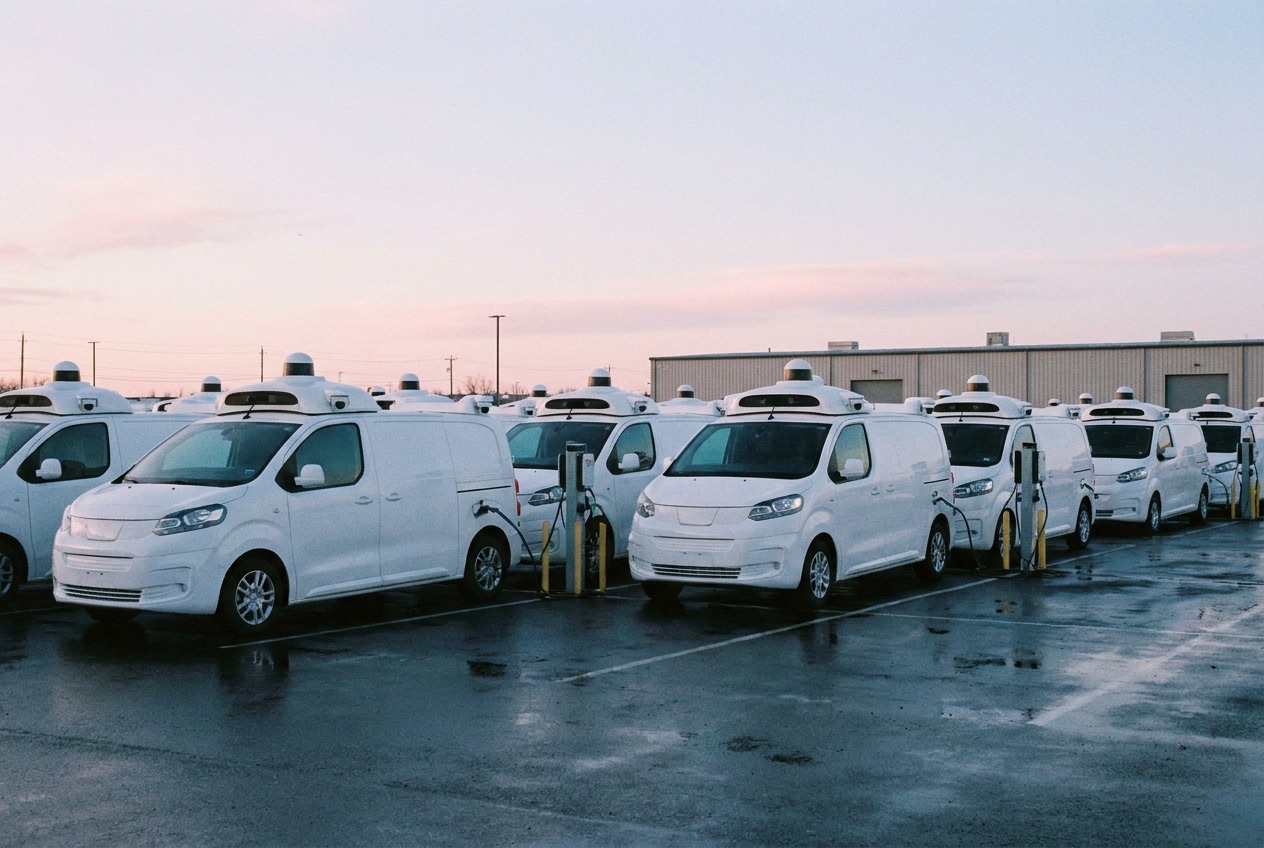
Many of the new cars are to come from China. Waymo has ordered thousands there to help expand its fleet, the New York Post reported, as cited by Semafor. Its new robotaxi, the Ojai, is a minivan made by Zeekr, a brand of China’s Geely Holding Group, fitted with Waymo’s sixth-generation driving system at its plant in Mesa, Ariz.
MoffettNathanson, a research firm that tracks shipping records, said in September that Waymo was on track to bring 5,100 Ojai into the United States by the end of the year, TechCrunch reported. Chinese electric cars face a 100 percent tariff on top of other import duties, Gizmodo noted, and TechCrunch reported that, for now, tariffs are cutting any savings the Ojai was meant to bring.
In the Madrid region, Waymo’s electric Jaguar I-PACE cars will appear on the streets in the coming days, driven by hand at first, then tested with trained local specialists behind the wheel. “Madrid is an incredible capital of innovation and an integral part of our growing global presence. We can’t wait to serve Madrileños,” said Tekedra Mawakana, Waymo’s co-chief executive, in Waymo’s Madrid announcement.Waymo’s CountWaymo says it has completed more than 20 million trips and serves hundreds of thousands of commercial rides a week. Over more than 400 million fully autonomous kilometers, it says, its cars were in 95 percent fewer crashes involving serious injury or worse than humans in the cities where it operates.
Rivals already hold a permit there, for preparation and testing. On Sept. 10, WeRide, Uber and AVOMO said Spain’s Directorate General of Traffic had granted them the country’s first national permit for Level 4 autonomous passenger vehicles. They plan to start with 20 cars in Greater Madrid, each under the supervision of a specialist in the car, and expect commercial operations to begin by the end of 2026, after they complete deployment preparations and reach “the necessary operational and regulatory milestones.”
Waymo has not confirmed Semafor’s figures. Alphabet reports its third-quarter results on Oct. 28.
Sources
- Semafor, “Waymo plans to quintuple its fleet,” Oct. 19, 2026.
- Waymo, “¡Llegamos a Madrid! Waymo is coming to Spain,” Oct. 20, 2026.
- Hertz Global Holdings (SEC filing), “Form 8-K, Item 1.01: the Oro Mobility joint venture,” Oct. 20, 2026.
- Hertz, “Hertz-Backed Oro Mobility Secures $80 Million Strategic Equity Investment to Accelerate Independent Growth,” Oct. 20, 2026.
- Waymo, “Waymo Closes $5 Billion Debt Financing to Accelerate Business Expansion,” Oct. 8, 2026.
- Uber Technologies, “WeRide, Uber and AVOMO Receive Spain’s First National Operating Permit for Level 4 Autonomous Passenger Vehicles,” Sept. 10, 2026.
- TechCrunch, “Waymo is scaling fast: Here’s what the fleet data shows,” Sept. 24, 2026.
- Gizmodo, “Waymo Reportedly Plans to Put 20,000 Robotaxis on the Road by the End of 2027,” Oct. 20, 2026.
- Alphabet, “Alphabet Announces Date of Third Quarter 2026 Financial Results Conference Call,” Oct. 6, 2026.